About this archive
The journal
The Cahiers de la Quinzaine was a literary and political review that Charles Péguy founded in January 1900 and edited until his death as a French infantry lieutenant at the First Battle of the Marne on 5 September 1914. Published roughly every two weeks (the name means "Fortnightly Notebooks"), the cahiers came out in fifteen series totaling 229 issues. Subscribers received them by mail; many of the issues were printed in editions of only fifteen hundred or two thousand copies.
Péguy was simultaneously editor, publisher, business manager, distributor, proofreader, and frequent contributor. He signed every colophon as le gérant. He printed each cahier at Imprimerie de Suresnes and later at Julien Crémieu, imprimeur, 13 et 15, rue Pierre-Dupont, Suresnes. The journal lost money for most of its run. Péguy ran it from a small bookshop opposite the Sorbonne.
The contributors
Among the writers Péguy gathered around the journal:
- Romain Rolland, whose ten-volume novel Jean-Christophe ran serially across the Cahiers and won the Nobel Prize for Literature in 1915.
- Maxime Vuillaume, an exiled veteran of the Paris Commune of 1871, whose ten-volume Mes cahiers rouges remains a principal source for historians of the Commune.
- Julien Benda, whose novel L'Ordination appeared in the Cahiers in 1911–1913 (before he wrote La Trahison des clercs).
- Daniel Halévy, historian and Dreyfusard, whose political and historical writing ran across many issues.
- Paul Milliet, whose long editorial project Les Milliet assembled three generations of his family's letters, including the Mexico letters of his uncle Adrien de Tucé from 1862–1867.
- And many others: René Salomé, André Suarès, Joseph Reinach, Félicien Challaye, Lucien Herr, Georges Sorel, M. M. Mangasarian, Édouard Berth, and others.
How the site is organized
The cahier — the printed issue — is the primary unit. Browse the chronological river of all 229 cahiers to read them in order of publication, with each cahier's editorial apparatus preserved: Péguy's Avertissements, the pieces in their printed order, the colophon, the back-cover commerce notices.
Secondary navigation by author: every contributor has a page listing their pieces in publication order. Péguy's page additionally lists his Avertissements, each cross-linked to the article it introduced.
Five multi-cahier works are also available as standalone reading editions for those who want to read the long serials straight through rather than through the periodical:
- Jean-Christophe — Romain Rolland
- Mes cahiers rouges — Maxime Vuillaume
- Les Milliet — Paul Milliet
- L'Ordination — Julien Benda
- Les Mystères — Charles Péguy
French and English
Every cahier is available in its original French, taken from the
Archive.org and Gallica scans of the original printings. English
translations are progressing piece by piece. French and English versions
of each piece live at separate URLs (/fr and /en);
where a translation does not yet exist, the French is still readable.
This archive
Compiled and translated by Wilson Pruitt. The translations are made with care but are not yet authoritative; corrections and improvements are welcome.
An iconographic life
Four photographs and a painting, 1894 — 1914.
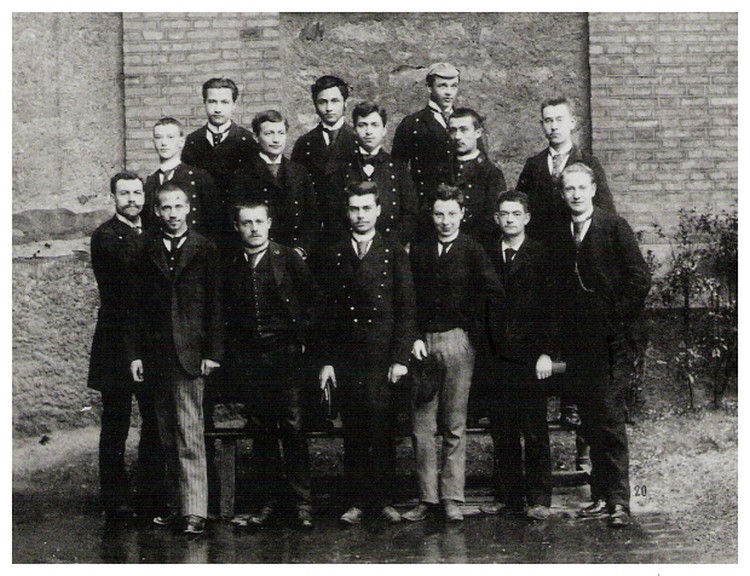
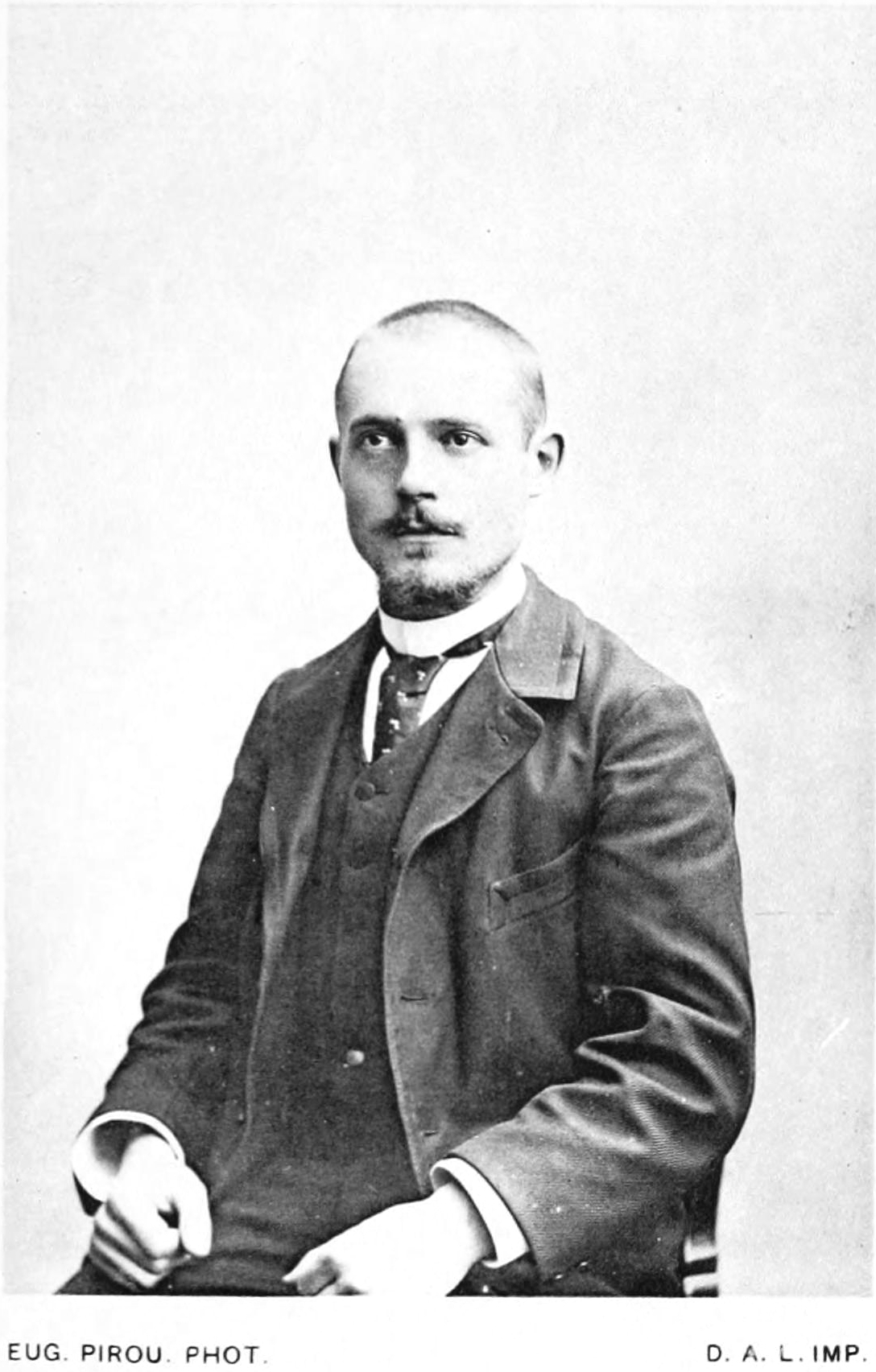
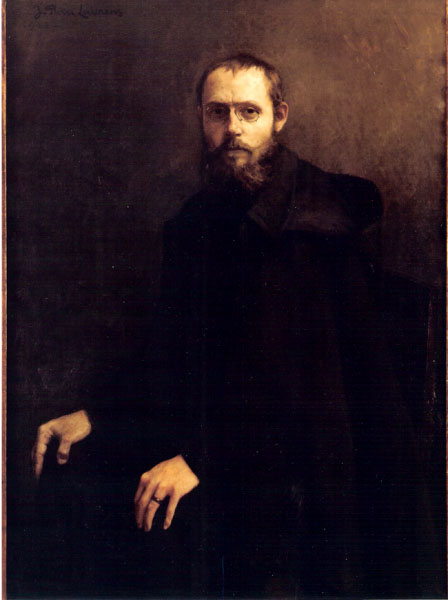
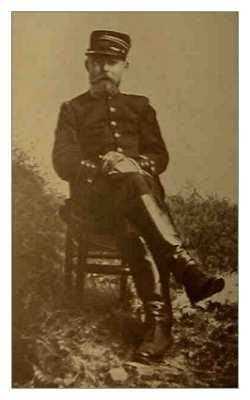
All portraits public domain. Provenance and source URLs in
public/portraits/MANIFEST.md.